
Every few months, a new headline declares that AI will make your job obsolete.
The fear is understandable. The conclusion is wrong. But the warning buried inside it? That part's worth paying attention to.
Technology doesn't replace people — it replaces tasks
The printing press didn't kill writers. It killed scribes. The spreadsheet didn't kill accountants. It killed the people whose only job was adding up columns.
AI follows the same pattern. It's not replacing the marketer who understands strategy, brand voice, and audience psychology.
It's replacing the one whose only skill was executing repetitive tasks. That's the honest truth.
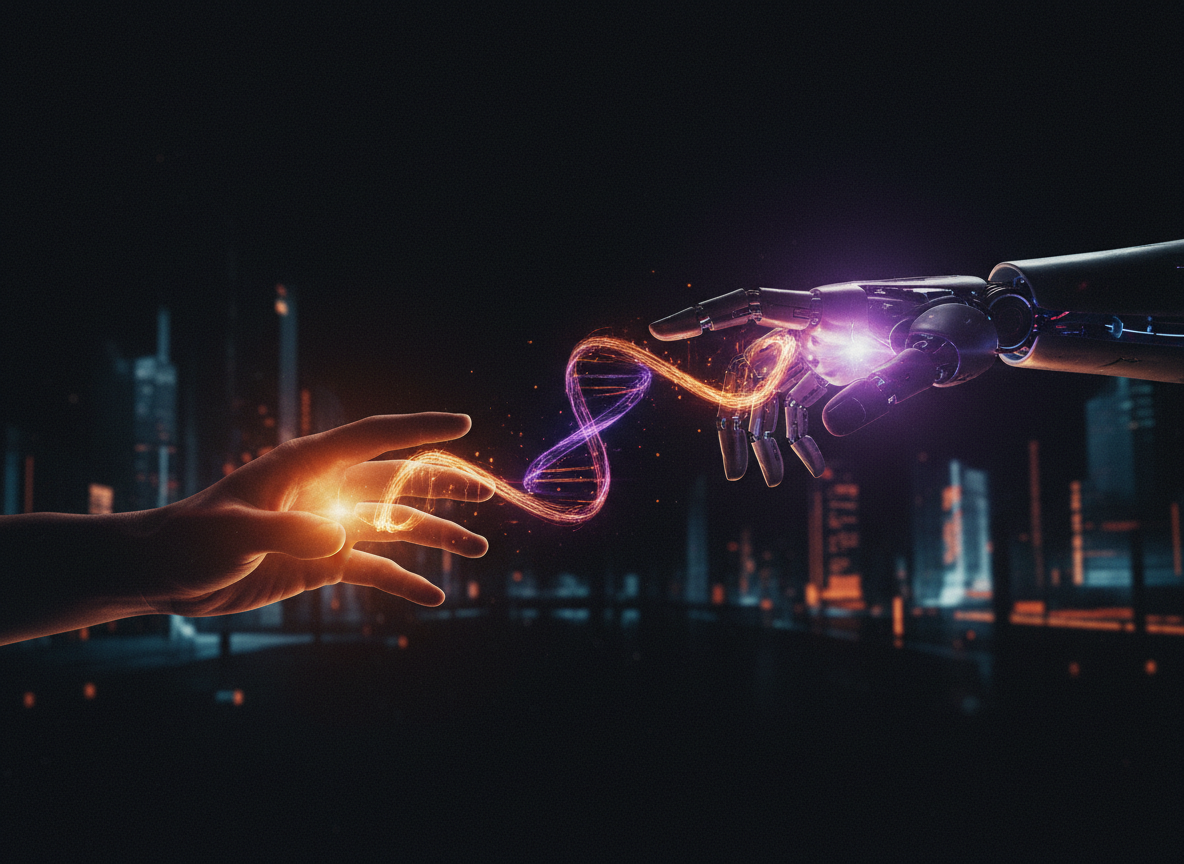
The future belongs to those who learn to work alongside AI — not against it.
The gap is already opening up
Here's what a typical week looks like with and without AI assistance:
Without AI
- • 2 blog posts per week
- • 4 hours per article researching
- • Manual email segmentation
- • One social platform managed well
- • Monthly content calendar
With AI
- • 5–7 blog posts per week
- • 45 minutes per article researching
- • Dynamic audience segmentation
- • Four platforms with repurposed content
- • Weekly strategy pivots based on data
Over 12 months, the AI-assisted creator produces 5x the output — with higher quality and faster iteration. That gap compounds every single week.
The skills that become more valuable
As AI handles more of the execution, these human skills become rarer — and more valuable:
AI can generate content. It can't decide what content to create, for whom, or why. That's still yours.
Knowing what's good — what resonates, what's on-brand — requires judgment AI doesn't have.
Partnerships and trust are built human-to-human. AI can draft the outreach email. It can't build the relationship.
AI remixes existing ideas. Genuinely new perspectives come from lived experience. That's irreplaceable.
"The question isn't whether AI will change your industry. It's whether you'll be the one leading that change or reacting to it."
Your move
Stop debating whether AI is good or bad. Start experimenting.
Pick one task you do every week and try automating part of it. See what happens. Adjust. Repeat.
The future belongs to the augmented — people who use AI as a force multiplier for their uniquely human strengths.
Disclosure: This article may contain affiliate links. If you purchase through them, we may earn a commission at no extra cost to you.